


- Category
Safety Cabinets for Flammable & Chemical Storage
-

Flammable Cabinets
Store flammable liquids safely near work areas in Eagle flammable safety cabinets. All Eagle metal cabinets are constructed of 18-gauge steel with double-wall construction and meet NFPA 30 and OSHA requirements. Multiple colors and sizes available.
Shop now -

Corrosive Safety Cabinets
Use corrosive safety cabinets to store flammable and non-flammable acids and corrosive liquids. All interior and exterior surfaces, including shelves, are finished with blue epoxy powder coating. HDPE corrosive cabinets are also available.
Shop now -

Paint Safety Cabinets
Eagle's line of paint and ink safety cabinets are FM approved cabinets for safely and securely storing and organizing paint and ink cans. These cabinets are available in red and yellow with additional shelves to maximize storage space.
Shop now -

Pesticide Safety Cabinets
Pesticide safety cabinets help companies who specialize in lawn care, golf course management or agricultural interests or who handle and store pesticides and poisons. Eagle metal cabinets meet NFPA Code 30 and OSHA requirements.
Shop now -

Drum Safety Cabinets
Use Eagle drum cabinets to keep 30- and 55-gallon drums close to your work area while safely containing flammable liquids or hazardous waste. Our line of drum safety storage cabinets can accommodate both horizontal or vertical drum storage.
Shop now -

Cabinet Accessories
Eagle provides an assortment of cabinet replacement parts and accessories, including self closing adapter kits that allow users to convert cabinet doors from manual to self-close. Other available parts include shelves, trays, labels, and more.
Shop now -
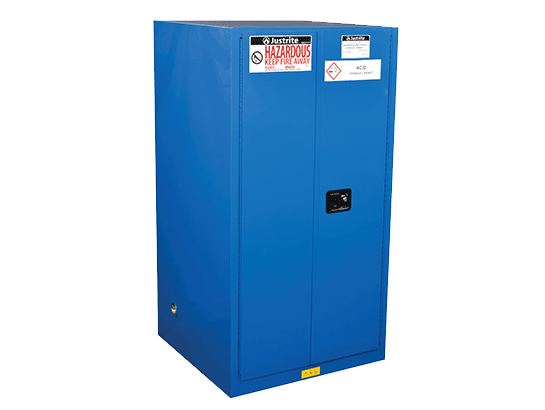
Hazardous Material Cabinets
Justrite provides specially-designed, code-compliant cabinets for hazardous material storage of chemicals. All feature self-closing doors, and many are available with ChemCor® lining for applications that require protection from harsh corrosives.
Shop now -
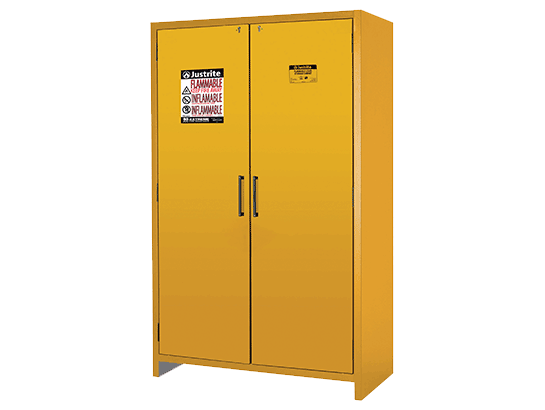
EN Safety Cabinet for Flammables
Justrite EN safety cabinet accessories offer an opportunity to expand storage and convenience capabilities of existing cabinets. Available accessories include additional shelves, base covers, cabinet movers and more.
Shop now -
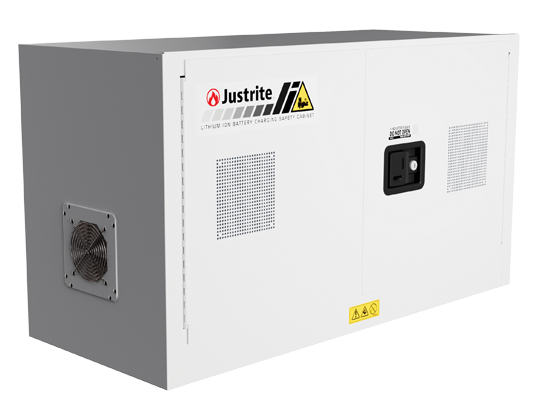
Lithium Ion Battery Cabinets
Justrite lithium ion battery charging cabinets help reduce the risks and hazards resulting from a lithium ion thermal runaway event – ideal for industries that regularly charge and store battery-powered tools and equipment.
Shop now -

Lithium Ion Battery Charging Safety Cabinets
Shop now
Featured Products
-
 45 Gallon Flammable Liquids Cabinet, 2 Shelves, 2 Doors, Self Close, Yellow - 4510XModel No: 4510X$1,838.00
 -

-


Shop By
Shopping Options
Safety Cabinets for Industrial Hazardous Material Storage
Safety cabinets provide secure storage for flammable liquids, corrosives, pesticides, and other hazardous materials commonly used in industrial, laboratory, and commercial environments. Designed to help reduce fire risks and improve workplace organization, safety cabinets are an essential component of a comprehensive safety and compliance program.
Eagle safety cabinets are engineered for durability, compliance, and long-term performance in demanding workplaces. With a wide range of sizes, colors, and configurations available, facilities can safely store different classes of hazardous materials while maintaining proper segregation and easy access.
Types of Safety Cabinets
Eagle offers safety cabinets for a variety of hazardous material storage applications, including:
- Flammable liquid safety cabinets
- Corrosive and acid storage cabinets
- Paint and ink safety cabinets
- Pesticide safety cabinets
- Drum storage safety cabinets
- Hazardous material cabinets
- Cabinet accessories and replacement parts
Built for Safety and Durability
Eagle safety cabinets are constructed from rugged double-wall steel and incorporate safety-focused design features to help protect people, property, and the environment. Cabinets are designed to support OSHA and NFPA guidelines for the storage of hazardous materials while providing reliable performance in industrial settings.
Manufactured in the USA, Eagle cabinets are available in capacities ranging from 2 to 110 gallons to accommodate everything from small work areas to large-scale storage needs.
Eagle Safety Cabinet Features
- Reinforced double-wall steel construction with 1½" air space
- 18-gauge steel for long-term durability
- Lead-free baked-on powder coat finish for chemical resistance
- Continuous piano hinges for smooth door operation
- Three-point latch system with key lock for secure storage
- 2" leakproof raised sill to contain spills
- Adjustable galvanized steel shelves rated to hold up to 350 lbs
- Two internal vents with fire baffle and cap
- Ground connection for safe storage of flammable liquids
- Four adjustable leveling legs for stable installation
- Trilingual safety warning labels
OSHA and NFPA Compliant Safety Cabinets
Safety cabinets help facilities safely segregate hazardous materials while supporting OSHA, NFPA, and IFC compliance requirements. Features such as leakproof sump containment, grounding connections, self-closing door options, and corrosion-resistant finishes help improve workplace safety and hazardous material organization. Learn more about how to choose the right safety cabinet for your needs.
Flexible Storage for Many Applications
Whether you need to store gasoline, paints, solvents, corrosive chemicals, pesticides, hazardous materials, or lithium-ion batteries, Eagle safety cabinets provide dependable storage solutions designed for industrial safety and regulatory compliance.
Safety cabinets are commonly used in:
- Manufacturing facilities
- Laboratories
- Chemical processing plants
- Maintenance operations
- Automotive facilities
- Industrial storage areas
Need Help Choosing the Right Safety Cabinet?
Eagle offers safety cabinet solutions for flammable liquids, corrosives, hazardous materials, and specialty chemical storage requirements. Contact our team for help identifying the right cabinet configuration for your application and compliance needs. Not sure if you need a flammable storage cabinet? Review our guide for small shops and labs: How to Choose a Flammable Storage Cabinet.
Are safety cabinets required to have their bung plugs installed?
Yes, it is required to keep the bung caps tightly in place, unless venting. Please reference the TechTALK on Safety Cabinet Venting for further information. https://www.justrite.com/tech-talk/safety-cabinet-venting
Can I leave my containers in boxes and store them in a safety cabinet?
This question is asked a lot. There is nothing in writing to preclude you from having boxes, papers, etc., in a safety cabinet, but we discourage it. This is an area of best practice not addressed by the law. The standards to which a cabinet is tested limit the internal temperature from exceeding 325°F (163ºC) for 10 minutes in a fire test. This is a conservative temperature below the auto ignition temperatures of the liquids being stored. It makes sense that packaging, such as boxes, are made of materials with auto ignition temperatures higher than the 325°F (163ºC) too. But, what can be dangerous is if those boxes become soiled with residues of the flammable liquids which in turn give off harmful, ignitable, or hazardous vapors. Additionally, it is important to avoid storing materials and combinations of material that can spontaneously combust and create fire inside the cabinet, like oily rags and incompatible materials.
Our vote is on the side of best practice, safety, and of tidy housekeeping. We have heard of OSHA inspectors frowning on this practice even in the absence of law. Learn more about safe storage practices in safety cabinets. https://www.justrite.com/news/chemical-storage-guidelines-for-safety-cabinets/
Can I store gasoline and oil in the same cabinet?
Yes. Gasoline and oil can be stored together in the same flammable liquid safety cabinet, as long as the cabinet’s capacity limits are not exceeded. OSHA 29 CFR 1910.106(d)(3)(i) and (ii) allows a maximum of 60 gallons of Class I or Class II liquids, or up to 120 gallons of Class III liquids, to be stored in a single storage cabinet. Always follow applicable codes, container compatibility requirements, and manufacturer guidance when storing multiple materials. Learn more about proper chemical storage in safety cabinets. https://www.justrite.com/news/proper-chemical-storage-in-flammable-safety-cabinets/
Can I store nitric acid in a safety cabinet?
Nitric acid should be stored in a hazardous materials cabinet that is properly labeled. Because nitric acid is both a corrosive and an oxidizer, special care should be taken to promptly neutralize and clean up any spills. Only approved, tightly closed containers should be used, and containers should be cleaned of residue and resealed as needed. Learn more about proper chemical storage in safety cabinets. https://www.justrite.com/news/proper-chemical-storage-in-flammable-safety-cabinets/
Can containers be stored in the sump of a safety cabinet?
Safety cabinet sumps are designed to be watertight and at least 2 inches deep to help contain leaks and provide early visual indication of spills. Regulations do not specify a minimum sump volume or prohibit storing containers in the sump. However, some authorities having jurisdiction or internal safety policies may discourage this practice. Users should follow site-specific requirements and local guidance. Explore other best practices for safety cabinet usage. https://www.justrite.com/news/best-practices-for-using-flammable-safety-cabinets/
Do I have to store my paints and inks in a red cabinet?
No. Any flammable liquid safety cabinet approved for flammable or combustible liquids can be used to store paints and inks. Red cabinets are often preferred for paint cans because they include an extra shelf, but yellow cabinets can also be configured with additional shelving to store gallon containers efficiently. Multiple cabinet colors are available. Learn what color chemical storage will work for your operation. https://www.justrite.com/news/proper-chemical-storage-includes-color-coded-cabinets/
Do I need self-closing cabinet?
Self-closing requirements for flammable liquid safety cabinets depend on state and local fire codes. Hazardous materials safety cabinets are required to be self-closing. As a best practice, Justrite recommends using self-closing cabinets whenever possible to enhance safety and compliance. Learn more about flammable cabinets with self-closing doors. https://www.justrite.com/compliance/safety-cabinets-self-closing-doors
Do I need to keep a safety cabinet up against the wall?
No, our cabinets have been tested and approved as freestanding and can be used in that manner. Explore other best practices for safety cabinet usage. https://www.justrite.com/news/best-practices-for-using-flammable-safety-cabinets/
Do flammable safety cabinets need to be grounded?
To ensure safety in your facility, it’s important to eliminate the chance of an electrostatic discharge while handling flammable fluids. If you are going to dispense Class 1 flammable liquids from a container held within safety cabinet, you need to ground the cabinet. As an industry best practice, we recommend grounding the cabinet when dispensing Class 2 combustible liquids if the liquids are near, at, or above the liquid’s flashpoint temperature. Learn more about best grounding practices in this helpful guide from Justrite. https://www.justrite.com/news/justrites-guide-to-safe-grounding-and-bonding-practices/
Does my safety cabinet need to be grounded?
It is necessary to ground a safety cabinet if you are dispensing liquids from container(s) inside the cabinet, and the potential of an ignitable vapor is possible. This is not to preclude one from grounding all cabinets as a best practice. Please see our TechTALK on Safety Cabinet Grounding for further information. https://www.justrite.com/tech-talk/grounding-a-justrite-safety-cabinet
How do I clean up a spill in the sump of a safety cabinet, since there is no drain plug?
Cabinets should be inspected often and spills should be cleaned up immediately. The 2-inch watertight sump in a safety cabinet is a required feature to minimize the impact of a spill. We do not have a drain plug in the cabinet's sump, because plugs are vulnerable and can be mishandled. Sorbents and rags for absorption are typically used for liquid clean up. See more cabinet operation and maintenance information. https://www.justrite.com/news/11-tips-for-your-safety-storage-cabinet/
How do I vent a safety cabinet?
Safety cabinets are designed to be used with or without venting, depending on your application and local codes. If venting is required, it should be done in accordance with manufacturer instructions and applicable regulations to maintain the cabinet’s fire-protection performance. For detailed guidance on when venting is recommended, proper venting methods, and code considerations, refer to our TechTALK on Safety Cabinet Venting. https://www.justrite.com/tech-talk/safety-cabinet-venting
How many gallons will a safety cabinet sump hold?
Safety cabinet sumps are required to be at least 2 inches deep and watertight. The actual sump volume varies depending on the cabinet’s width and depth, and minimum gallon capacity is not specified in applicable regulations. The sump is designed to provide a visual indication of a leak and to contain spills long enough for corrective action before liquid escapes the cabinet. Learn more about Justrite cabinet operation and maintenance information. https://www.justrite.com/news/11-tips-for-your-safety-storage-cabinet/
What types of chemicals can be stored in hazardous material safety cabinets?
Hazardous material safety cabinets are intended to store corrosive solids and liquids, flammable solids, organic peroxide formulations, oxidizer solids and liquids, pyrophoric solids and liquids, toxic or highly toxic solids and liquids, unstable (reactive) solids or liquids, and water-reactive solids or liquids.
Always ensure that incompatible materials are stored in separate cabinets, and consult your local code authority for any other items in question. Learn more about hazardous material safety cabinets. https://www.justrite.com/tech-talk/hazardous-material-safety-cabinets-the-regs
What types of chemicals should not be stored in hazardous material safety cabinets?
Hazardous material safety cabinets should not be used to store pressurized gas cylinders, cryogenic fluids, or flammable and combustible liquids.
For more information on these restricted hazardous material categories, refer to NFPA 55 Compressed Gases and Cryogenic Fluids Code and NFPA 30 Flammable and Combustible Liquids Code. Consult your local code authority for any other items in question. Learn more about hazardous material safety cabinets. https://www.justrite.com/tech-talk/hazardous-material-safety-cabinets-the-regs
Why can’t I store 45 gallons in a 45-gallon safety cabinet?
The usable storage capacity of a safety cabinet depends on the size and shape of the containers being stored, not just the cabinet’s rated capacity. As an example, a 45-gallon Justrite safety cabinet typically holds nine 5-gallon safety cans. Cabinet ratings refer to fire safety performance, not a guaranteed liquid volume. Learn more about proper chemical storage in safety cabinets. https://www.justrite.com/news/proper-chemical-storage-in-flammable-safety-cabinets/