


- Category
Safety Cans and Containers
-

Type I Safety Cans
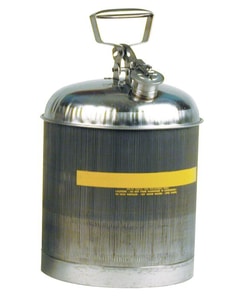
Eagle Type I safety cans are accepted under CARB, meet OSHA and NFPA requirements, and are UL, ULC and FM Approved for safe handling and storage of gasoline and other flammable liquids. Cans feature a single opening for pouring and filling.
Shop now -

Type II Safety Cans
Type II safety cans are constructed of galvanized steel and help reduce explosion risks while dispensing flammable liquids through a flexible 12-in metal spout. Eagle cans feature non-sparking flame arresters in the filler opening and spout.
Shop now -

DOT Approved Cans
Use Type II DOT safety cans to reduce the danger of explosion while transporting flammable liquids on roads and highways. Heavy duty roll bars protect both spouts and a thumb screw mechanism ensures the filler opening stays closed in transport.
Shop now -

Oily Waste Cans
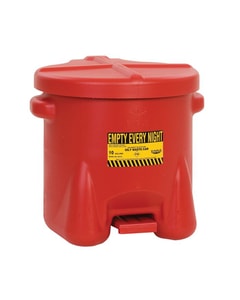
Eagle supplies durable poly oily waste cans for fire-safe temporary storage of solvent, waste rags, shavings and other materials subject to spontaneous combustion. The HDPE construction will not rust or dent and is resistant to most chemical compounds.
Shop now -

Biohazard Containers
Our HDPE biohazard waste containers offer safe, temporary storage of biohazard materials and advise workers of potential exposure to hazardous pathogens. Cans feature a self-closing lid with foot lever, comply with OSHA and are FM Approved.
Shop now -

Faucet Cans
Eagle metal safety cans with faucets help control dispensing of flammable liquids into small capacity vessels via a variety of drip-free self-closing dispensing faucet styles with neoprene gaskets. Perfect for workbenches or shelves. FM approved.
Shop now -

Disposal Cans
Safety disposal cans provide an intermediate station for the temporary storage of liquid wastes. Spout cap opens to a wide 80 degree angle and can be locked open for emptying various type containers. All cans are equipped with a flame arrester.
Shop now -

Surface and Parts Cleaners
Eagle supplies surface and parts cleaners including bench cans, plunger cans, and daub cans to help safely remove oil, grease and grime from equipment parts. These FM-approved products feature dasher screens and comply with OSHA standards.
Shop now
Featured Products
-
 5 Gallon Steel Safety Can for Flammables, Type I, Flame Arrester, Funnel, Red - UI50FSModel No: UI50FS$74.00
 -
-

Shop By
Shopping Options
Safety Cans and Containers
Eagle is an industry leader of galvanized Type I and Type II safety cans that meet OSHA and NFPA Code 30 requirements, and are UL and ULC listed and FM Approved for safe storage and handling of flammable liquids.
Eagle offers FM Approved Compliance Solutions in a variety of metal gas cans and flammable liquid containers, including stainless steel gas cans, lab cans, faucet cans, disposal cans, plunger, bench and daub cans, and poly oily waste and biohazard containers to help keep your personnel and facilities protected. All of our quality products are manufactured in the USA.
Whether you need an Eagle 5 gallon gas can in red, blue kerosene, green oil, or a yellow diesel can, Eagle has options for these and all your other flammable liquid container needs.


Are safety cans OK for outdoor use?
Yes, safety cans can be used outdoors, and many Justrite customers do. However, outdoor use requires specific precautions due to temperature changes, vapor pressure, and transport considerations.
When temperatures are hot, vapor pressure inside a safety can increases. Safety cans are designed with emergency pressure relief, typically rated at 3 to 5 psi, but it is still important to relieve pressure in the vapor space before dispensing to prevent sudden fluid release or splashback. Rapid temperature drops can also create a vacuum inside the can, which in rare cases may lead to implosion. To reduce this risk, keep cans shaded, avoid extreme temperature swings, and maintain fluid levels above half full when possible.
Safety cans should always be stored in well-ventilated areas, never in closed vehicles or passenger compartments, and secured to prevent movement during transport. When transporting fuel for job-related activities, follow U.S. DOT Material of Trade rules, which allow a maximum of eight gallons in safety cans. Learn additional tips and best practices for outdoor safety can use here. https://www.justrite.com/news/tips-for-using-justrite-safety-cans-outside/
Can I fill a safety can while it is in my vehicle trunk?
No. A safety can should always be placed on the ground when filling. Filling a safety can while it is inside a vehicle can increase the risk of static electricity buildup, which may lead to ignition. Placing the can on the ground helps dissipate static and supports safer fuel transfer. Learn other safety tips when using Justrite safety cans outdoors. https://www.justrite.com/news/tips-for-using-justrite-safety-cans-outside/
Can I interchange the hose size on a Justrite Type II safety can?
Yes. Justrite Type II safety cans are compatible with both 1-inch and 5/8-inch hoses, and the hoses are interchangeable. This allows users to select the hose size that best fits their dispensing application. Learn more about the parts of a Type II safety can. https://www.justrite.com/safety-cans-containers/design-parts-purpose
Can I store my plunger can in a safety cabinet?
No. Plunger cans are not intended for storage and are not considered approved safe closed containers. They are designed for dispensing small quantities of flammable liquids at the point of use during the workday. For storage, plunger cans should be emptied into an approved container such as a safety can and then stored in a safety cabinet. Learn more about Justrite parts cleaning equipment. https://www.justrite.com/news/cleaning-equipment-parts-with-acetone/
Can I transport gasoline in a safety can in my vehicle?
Yes, gasoline can be transported in a safety can when proper precautions are followed. The safety can should be secured to prevent movement, and the vehicle should be well ventilated. A safety can should not be stored in a vehicle and should always be removed before filling or dispensing fuel. Before placing the can back into the vehicle, make sure any fuel residue on the exterior is cleaned off. For maximum safety when transporting gasoline in vehicles, consider using DOT-approved safety cans. https://www.justrite.com/safety-cans-and-containers/dot-safety-cans
Do safety cans need to be a specific color?
For flammable liquids with a flash point at or below 80°F, OSHA requires safety cans to be red with additional yellow identification. For other fuels and liquids, colors like yellow for diesel, blue for kerosene, and green for oil are common industry conventions, but requirements can vary by workplace and local code. Learn more about safety can colors. https://www.justrite.com/safety-cans-containers/color-guide
Do you make jerry safety cans?
No. Justrite does not manufacture jerry-style safety cans, and there are currently no plans to introduce this product type. Justrite safety cans are designed to meet applicable safety and performance standards for approved flammable liquid handling and storage. Learn more about the safety cans Justrite does provide. https://www.justrite.com/safety-cans-containers
How can I increase the flow rate on a Justrite Type II safety gas can?
To increase flow on a Type II safety can, remove the hose and slightly loosen the screws on the spout assembly using a Phillips screwdriver. This adjustment can improve venting and allow fuel to dispense more smoothly. Be sure to follow manufacturer instructions and retighten components as needed for safe operation. Learn more about the parts of a Type II safety can. https://www.justrite.com/safety-cans-containers/design-parts-purpose
What is a flame arrester and why is it important in a safety can?
A flame arrester is a metal screen installed inside a safety can spout that helps prevent flames from traveling back into the can’s vapor space. By stopping flame propagation, it reduces the risk of ignition or explosion during pouring or if the can is exposed to an external ignition source. Learn more about the parts of a Justrite safety can. https://www.justrite.com/safety-cans-containers/design-parts-purpose
What is the difference between Type I and Type II safety cans?
Type I safety cans have a single opening that is used for both filling and dispensing. When filling Type I safety cans, using a funnel is recommended to help reduce spills.
Type II safety cans have separate openings, one for filling and a dedicated spout for dispensing, which allows for more controlled pouring. Justrite Type II safety cans typically include a flexible hose and controlled-pour features such as an AccuFlow manifold with a Safe-Squeeze trigger handle. Choosing a flammable safety can? Ask these questions first. https://www.justrite.com/news/5-questions-to-ask-when-choosing-safety-cans-for-flammables/
What makes a safety can OSHA approved?
An OSHA-approved safety can is a listed container with a maximum capacity of 5 gallons that includes a spring-closing lid, a spout cover, and a pressure-relief design. These features help safely relieve internal pressure if the can is exposed to fire and reduce the risk of ignition during normal use. Learn more about OSHA requirements for containers. https://www.justrite.com/news/understanding-third-party-certification-safety-products/
What’s the maximum size for a safety can?
By definition, a safety can has a maximum capacity of 5 gallons. Portable containers with larger capacities are classified differently and must meet additional design and regulatory requirements, such as those that apply to portable tanks. Learn what makes a safety can safe. https://www.justrite.com/article/what-really-makes-a-safety-can-safe
When do safety cans need to be grounded and bonded?
Safety cans should be grounded and bonded when dispensing or transferring flammable liquids, especially Category 1 and Category 2 liquids. Proper grounding and bonding require metal-to-metal contact to control static electricity and reduce the risk of sparks during liquid transfer. For more information, visit Justrite's guide to safe grounding and bonding. https://www.justrite.com/news/justrites-guide-to-safe-grounding-and-bonding-practices/
Why is there a brass fitting on the end of the safety can hose?
The ferrule on the end of the flexible hose is made from brass, a non-sparking material. The metal hose and brass fitting help maintain electrical continuity between containers, supporting proper bonding during dispensing and reducing static-related ignition risks. Learn more about the parts of a Justrite safety can. https://www.justrite.com/safety-cans-containers/design-parts-purpose